

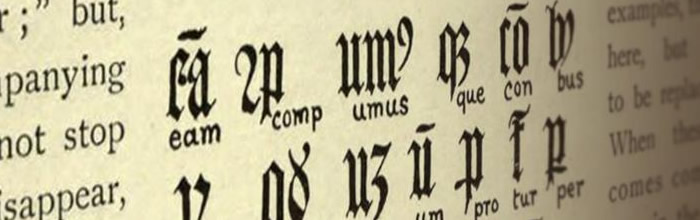
Regarding my own ability, is it because my dad taught us children the Greek alphabet before we had started school (and which we can all recite verbatim to this day), or that he used flashcards to teach us words?
Or that he left school at 14 and was self-taught, he adored learning and respected intellectualism, and he was sure as hell going to make certain his kids were knowledgeable?
Was it mam (a northeastern word) taking us to the library twice a week, or perhaps because she read to us every night, or maybe her own love of poetry and writing: we children of hers can recite reams of poetry word-for-word over 40 years’ later.
Maybe it’s because we didn’t have a telly. We didn’t have a stereo. There was no such thing as a home computer, or an X-Box (though there was a ‘wireless’ in the living room – oh how I laugh): there were no ‘distractions’.
Perhaps it’s that we were a family that sought to assert itself into the fabric of the neighbourhood through impeccable manners and fine intelligence, and no family was going to be able to look down on us just because we were ludicrously poor – even in those days, when everyone was poor.
On reflection, it can’t be any of the above, because I have a far greater competency in this particular field than do the others – and they each have a differing ability to one another.
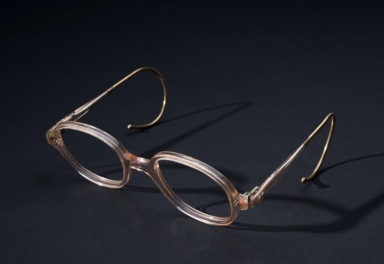 So, was it the latent squint, for which I was made to attend eye hospital and wear NHS glasses that I ‘lost’ when I was seven? I know that I had to look up at the blackboard to copy the writing upon it letter by painful letter at infant school.
Or perhaps it was that eight of us were living in the two-bed house and that I desperately hankered after seclusion (and with a lack of anything else to occupy me, reading was the only means of escape).
Or maybe it was because being the fourth child, I needed something in order to stand out from the others clamouring for mother’s attention.
I think the fear of embarrassment at junior school during spelling sessions was a sure-fire means of teaching me words and how to spell them correctly; I lived in a state of extreme terror that I would be judged a failure, and I remember well Mr Carr’s lessons in Class 5 of the juniors with our spelling diaries: ‘abundant’ and ‘complacent’ were two of those words. We were seven years old.
Maybe I have a highly attuned gift for visual imagery and sequencing, though the specialists would disagree, due to my eye problem (I still have a latent squint).
When I read a book, if I see a discrepancy in a proper noun, such as Białowieża Forest, of which I have never previously heard, I know that I saw that word around 40 pages previously: it was on the right-hand page, and it was around two-thirds of the way down the page, and it looks different to how I saw it the first time around.
Perhaps I don’t understand what visual imagery is.
Another thing I’ve noticed is that when I’m reading the newspaper and turn the page, a little-used word can pop into my head that I haven’t used, heard or written in months or even years (inchoate was yesterday’s, and I love that word), and lo and behold, that word is within the 8-point text on 9.5 leading in the densely written column of the new page. I’m not a thought-reader: I have glimpsed that word just by the simple act of folding over the paper; I’m also not a scientist, so there may be a different answer.
Here’s a thing: I speak Spanish. I learnt it verbally. I can spell perfectly in Spanish too.
In conclusion: Ingredients to ensure total domination in relation to spelling…
- One autodidact role model
- A ladle of parental guidance
- Two dessertspoons of literary nurture
- A nearby library or two
- A total absence of technology
- A need for space
- More than a soupçon of class warfare (don’t skimp on this)
- An overriding fear of failure
- A need for attention
- A latent squint
- An inferiority complex
- A visual brain
- Some kind of propellant (a superior brother helps)